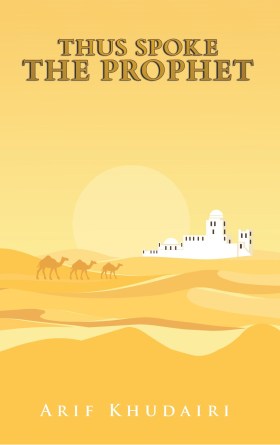
Thus Spoke the Prophet tells the story of Muhammad, the beloved and chosen Prophet. The novel begins when Muhammad determines to leave Medina and go back to Mecca. On hearing the news, the people of Medina, who were overwhelmed with grief, beg him to provide them with some of his advice. And thus numerous questions are put to Muhammad and he answers them by giving his opinion on variety of topics ranging from beauty, love, women, to peace, happiness, and human rights. When the discussion comes to an end, Muhammad bids farewell to them and the procession moves towards Mecca. The novel, however, does not end there as the author proceeds to describe the caravan trip along the road to Mecca through which Muhammad recollects some of his old memories. The novel has a simple characterization and plot. It possesses simple style, brief description, and poetic language. It is also characterized by the use of dialogue, and flash back. In addition, connections and comparisons can be made to Nietzsche’s Thus Spoke Zarathustra, and Gibran’s The Prophet. It corresponds to the former as each of them relates the life of a Prophet, and it is in conformity with the latter in size, dialogue, and discussing significant topics about life and death. This novel, however, differs from both of them as Thus Spoke Zarathustra portrays Nietzsche’s philosophical thoughts about the eternal recurrence of the same events, the will to power, and overman. As for The Prophet, it projects Gibran’s philosophy concerning the reincarnation, freedom, and the over-soul, whereas Thus Spoke the Prophet depicts the viewpoint of Muhammad, the beloved and chosen Prophet, and his perception of human life and social relations.
AVAILABLE NOW ON AMAZON.COM
CLICK HERE TO FIND OUT MORE

![Arabic_Bk_Cover_Rev2[1]-1](https://arif-khudairi.com/wp-content/uploads/2018/01/arabic_bk_cover_rev21-1.jpg?w=529)




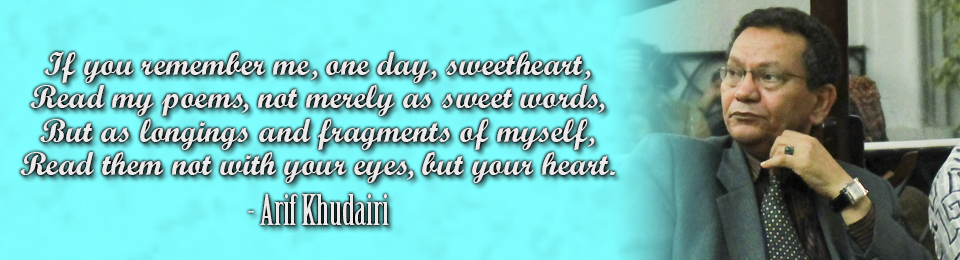
 Arif Khudairi